
Kafka & AI-Driven Event Streaming
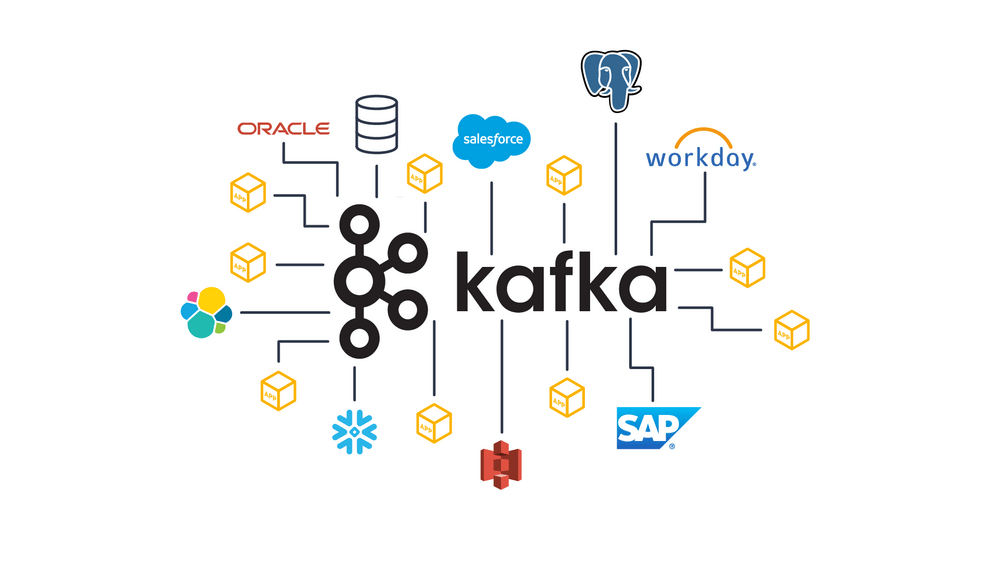
Kafka
Event streaming platform
Real-time data processing
Scalable message broker
Fault-tolerant storage
Pub-sub & message queuing
High throughput, low latency
Apache Kafka is a leading distributed event-streaming platform designed to help organizations build scalable, real-time data pipelines and event-driven architectures. As a high-throughput and fault-tolerant messaging system, Kafka empowers enterprises to process, analyze, and act on data streams with speed and reliability, enhanced with AI-driven real-time insights and intelligent processing.
⬤ Why Kafka?
Kafka enables seamless data flow across modern digital ecosystems and serves as a foundation for AI-powered real-time analytics and decision-making. Its robust architecture supports continuous data ingestion and ensures durability through distributed logs, making it ideal for applications requiring instant insights and intelligent responses.
⬤ Key Capabilities
High-Throughput Event Streaming
Efficiently handles millions of events per second, enabling real-time processing and AI-based stream analytics at scale.Scalable & Distributed Architecture
Built to grow with your business, with clusters that support AI-driven workload optimization and adaptive scaling.Reliable & Durable Messaging
Ensures fault-tolerant storage for consistent and reliable data feeding into AI/ML systems.Flexible Integration
Integrates with Apache Spark, Apache Flink, Elasticsearch, and cloud services, including AI/ML pipelines and data platforms.Real-Time Analytics & Processing
Powers applications such as fraud detection, IoT pipelines, monitoring, and AI-driven behavior analysis and predictions.
⬤ Business Use Cases
Event-Driven Microservices
Enables loosely coupled services enhanced with AI-powered decision-making systems.Data Pipeline Modernization
Acts as a hub for streaming ETL and AI-enabled data processing pipelines.IoT Streaming & Telemetry
Supports large-scale device data with real-time AI-based anomaly detection.Log Aggregation & Monitoring
Consolidates logs with AI-driven observability and predictive insights.
⬤ How We Help
As a technology consulting partner, we design and optimize Kafka solutions enhanced with AI-driven streaming architectures and intelligent data pipelines.
Our services include:
- Architecture design & platform implementation
- Real-time data pipeline development
- Migration from legacy messaging systems
- Performance tuning & capacity planning
- Managed Kafka services and ongoing support
FAQs
- What is Apache Kafka used for?
Kafka is used for real-time data streaming, log processing, event-driven architectures, and messaging in large-scale applications. - How does Kafka ensure fault tolerance?
Kafka replicates data across multiple brokers, ensuring fault tolerance and data durability, even if a node fails. - What is the difference between Kafka and traditional message queues?
Unlike traditional message queues, Kafka persists data for a configurable time, allowing multiple consumers to read messages independently. - Can Kafka handle large-scale data processing?
Yes, Kafka is designed for high-throughput and low-latency processing, making it suitable for big data and IoT applications. - How does Kafka handle scalability?
Kafka scales horizontally by adding more brokers and partitions, allowing it to handle millions of messages per second efficiently.